
The Heart of Tradition: Discovering the Rich Stories Behind Cultural Practices
Every culture carries stories that shape its identity, passed down through generations. These stories reveal the soul of traditions, connecting people to their roots and to each other. Exploring these narratives helps us understand not just customs, but the emotions and values that give them life. This post takes you on a journey through three vivid cultural experiences: the hypnotic rhythms of Gnawa music in the Sahara, the warm hospitality of a nomad family over mint tea, and the rich history of the caravan trade that made Merzouga a gateway to Africa.

The Sound of the Sahara: Gnawa Music and Desert Rhythms
Gnawa music is more than sound; it is a spiritual experience rooted in African, Berber, and Arab influences. Originating from sub-Saharan Africa, Gnawa was brought to Morocco by enslaved people centuries ago. Today, it remains a vital part of Moroccan culture, especially in desert regions like Merzouga.
Gnawa music combines hypnotic rhythms played on the guembri (a three-stringed bass instrument) with the sharp clatter of metal castanets called krakebs. The music often accompanies trance ceremonies, where participants enter altered states to heal and connect with spirits. The repetitive beats and chants create a deep emotional connection, inviting listeners to experience the desert’s timeless spirit.
Attending a Gnawa performance in the Sahara offers a glimpse into a world where music serves as a bridge between the physical and spiritual. The desert night, the flickering firelight, and the rhythmic sounds create an atmosphere that feels both ancient and alive.
Mint Tea and Hospitality: Visiting a Nomad Family
Hospitality is a cornerstone of many cultures, but in the Sahara, it takes on a unique form. Sharing mint tea with a nomad family is not just about drinking a beverage; it is a ritual that embodies respect, friendship, and storytelling.
When you visit a nomad family, you enter a space where tradition and daily life blend seamlessly. The preparation of mint tea is an art: fresh mint leaves, green tea, and generous amounts of sugar are brewed and poured from a height to create a frothy top. This process symbolizes generosity and care.
Sitting together around a low table or on cushions, guests listen to stories about desert life, survival, and the family’s history. The tea ceremony is a moment of connection, where strangers become friends through shared warmth and conversation. This hospitality reflects the nomads’ deep respect for guests and their environment.
The History of the Caravan Trade: Merzouga as a Gateway to Africa
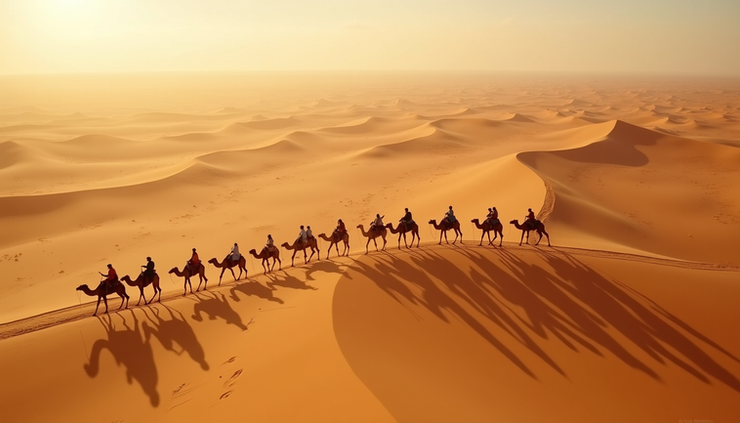
Merzouga’s location near the vast Sahara desert made it a crucial point in the caravan trade routes that linked North Africa to sub-Saharan regions. For centuries, caravans carried salt, gold, spices, and textiles across harsh desert landscapes, connecting distant cultures and economies.
The caravan trade shaped Merzouga’s identity as a meeting place for traders, travelers, and nomads. It fostered cultural exchange and economic growth, while also demanding resilience and cooperation among those who braved the desert.
Today, remnants of this history remain visible in the traditions, architecture, and stories of the region. Exploring Merzouga offers insight into how trade routes influenced not only commerce but also the blending of cultures and the survival strategies of desert communities.
Bringing Tradition to Life
Understanding cultural practices requires more than observation; it calls for immersion in the stories and emotions behind them. Gnawa music, nomad hospitality, and the caravan trade each reveal how traditions carry meaning beyond their surface.

Comments